
Contribution to Tribal Identity & Freedom Struggle
- Home
- Contribution

Dignity
Jatra Bhagat restored a sense of dignity among tribal people by emphasizing moral strength, ethical living, and confidence rooted in indigenous identity.

Unity
He encouraged unity across villages, creating collective awareness and cooperation based on shared values and peaceful discipline.

Discipline
Through discipline and simplicity, communities gained control over their lives, rejecting practices that weakened social and moral balance.

Awareness
He awakened political and social awareness, enabling tribes to resist injustice through non-violence and non-cooperation.
Discipline
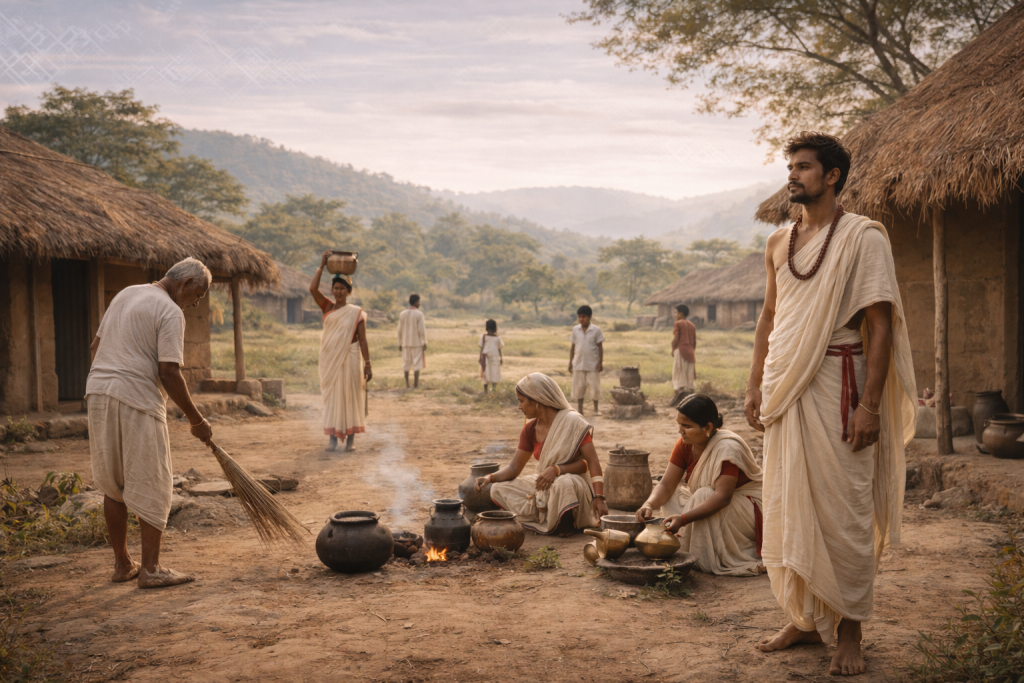
Discipline formed the moral backbone of Jatra Bhagat’s teachings and the Tana Bhagat Movement. He emphasized personal purity, simplicity, and self-control as essential qualities for social transformation. By encouraging people to give up alcohol, harmful customs, and excess, he helped communities regain control over their lives. Discipline was not imposed through force but cultivated through spiritual awareness and ethical living. This disciplined way of life strengthened mental clarity, social harmony, and collective confidence. It also enabled tribal communities to practice non-violent resistance with patience and consistency, proving that inner discipline could become a powerful tool against injustice and exploitation.
Unity
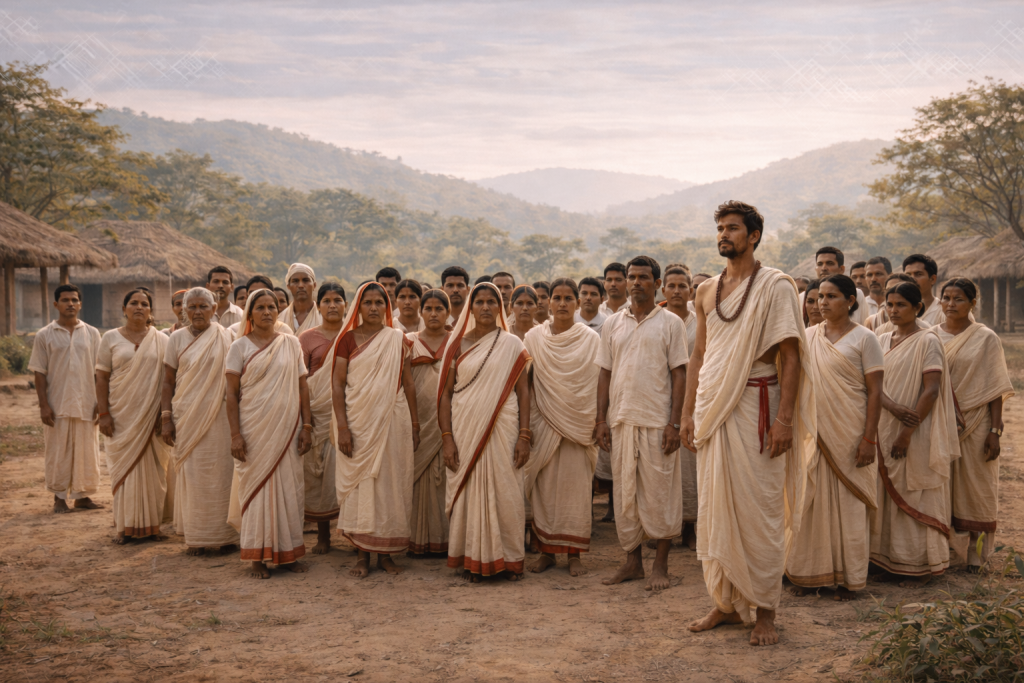
Unity was central to Jatra Bhagat’s vision of social reform. He believed that collective strength rooted in shared values was essential to overcome oppression and social fragmentation. By bringing together people from different villages under common principles of faith, purity, and non-violence, he fostered a strong sense of belonging and mutual responsibility. Unity helped dissolve internal divisions and reinforced trust among community members. This collective spirit enabled coordinated non-cooperation against unjust practices while preserving social harmony. Through unity, tribal communities transformed individual suffering into shared resilience and collective moral power.
Self-Reliance
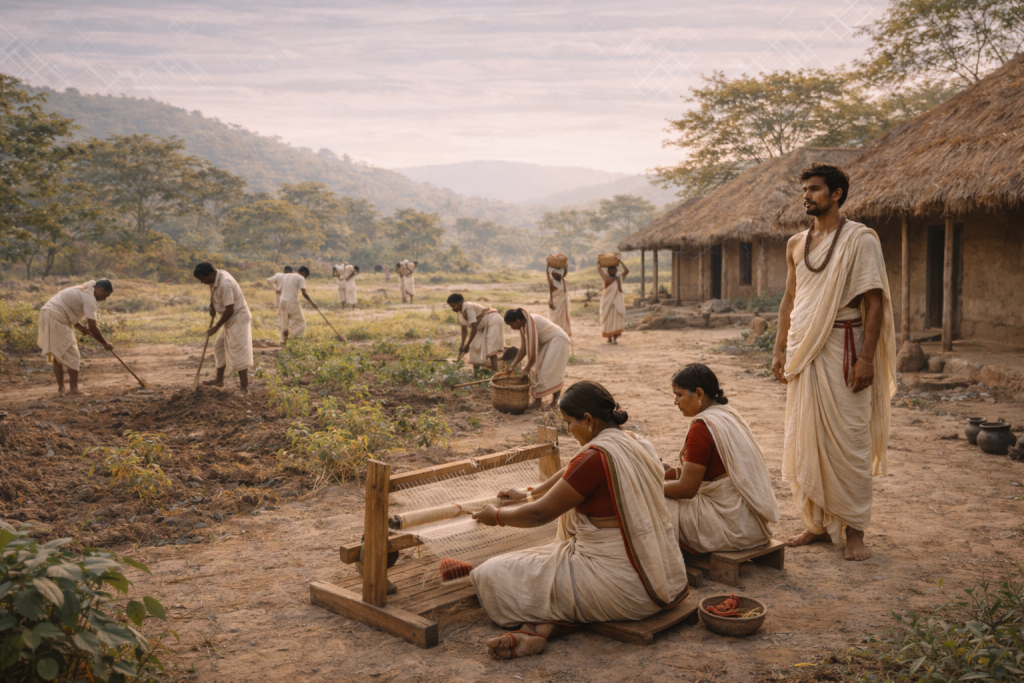
Jatra Bhagat strongly promoted self-reliance as a path to dignity and freedom. He encouraged tribal communities to depend on their own labor, resources, and traditional knowledge rather than exploitative external systems. Self-reliance strengthened economic independence and reduced vulnerability to colonial control. It also reinforced cultural pride by valuing indigenous practices, skills, and ways of life. Through disciplined living and collective effort, communities learned to sustain themselves with confidence and resilience. Self-reliance, in his vision, was not isolation but empowerment—enabling people to stand firmly on their own while maintaining unity and ethical strength.
Connection with India’s Broader Freedom Movement
Jatra Bhagat and the Tana Bhagat Movement shared a deep philosophical connection with India’s wider freedom struggle, particularly in their emphasis on non-violence, moral discipline, and non-cooperation. Although the movement arose independently from tribal social and spiritual conditions in the Chotanagpur region, its methods closely echoed the broader national resistance against British rule. By rejecting unjust taxes, forced labor, and colonial authority through peaceful means, the Tana Bhagat Movement aligned itself with the growing spirit of non-cooperation spreading across India. This parallel approach strengthened the idea that resistance did not always require armed rebellion, but could be rooted in ethical living and collective moral resolve.
At the same time, Jatra Bhagat ensured that the movement remained grounded in indigenous values and tribal identity rather than external political ideologies. While resonating with the principles of the national freedom movement, the Tana Bhagat struggle addressed the specific social, cultural, and economic realities of tribal communities. This balance allowed tribal resistance to become part of the larger anti-colonial consciousness without losing its unique character. Through peaceful defiance, unity, and self-discipline, Jatra Bhagat’s movement contributed to the wider freedom struggle by demonstrating how localized, faith-based resistance could strengthen India’s collective fight for dignity, justice, and self-rule.
Spiritual Roots of Resistance
The Tana Bhagat Movement emerged from tribal spiritual traditions but shared the same ethical foundation as India’s wider freedom struggle. Its emphasis on truth, purity, and moral discipline reflected a deeper resistance rooted in conscience rather than confrontation.
Parallel to Non-Cooperation Movement
Jatra Bhagat’s call for refusing unjust taxes, forced labor, and colonial authority closely aligned with the national Non-Cooperation Movement. Though developed independently, both movements relied on peaceful defiance and collective withdrawal from oppressive systems.
Commitment to Non-Violence
Non-violence was central to both the Tana Bhagat Movement and India’s broader freedom struggle. Jatra Bhagat demonstrated that calm resistance and disciplined living could challenge colonial power without bloodshed.
Tribal Participation in National Awakening
The movement brought tribal communities into the wider anti-colonial consciousness. It ensured that indigenous voices, struggles, and moral strength became part of India’s collective fight for freedom.
Indigenous Identity Within National Unity
While connected to the national movement, Jatra Bhagat preserved tribal culture, spirituality, and autonomy. This balance showed that local identity and national unity could coexist within the freedom struggle.